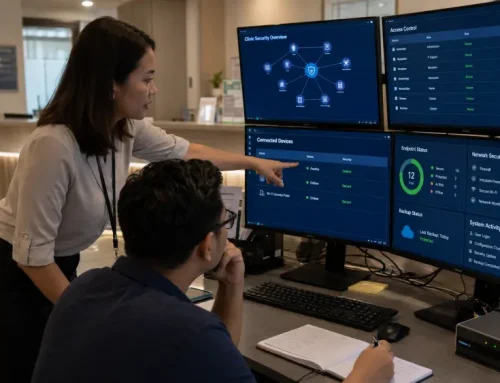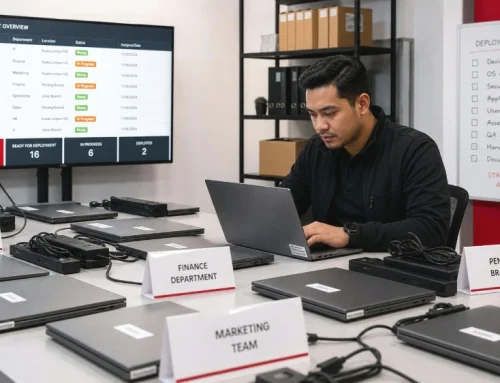
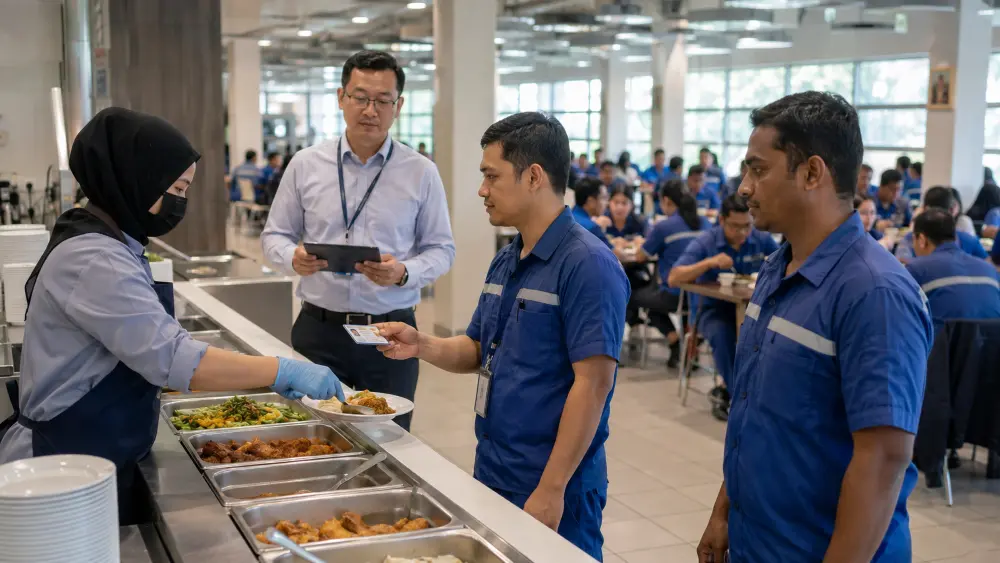
A factory meal break is a short operating window. When the canteen process breaks down, the impact can extend beyond the queue.
A contractor is missing from the approved list. An employee who changed shifts still has the previous meal arrangement. Another worker believes more subsidy balance should be available. The canteen operator pauses the transaction, employees wait longer, and HR or supervisors are pulled in to resolve the issue.
Repeated problems like these can affect more than meal service. Employees may return late to their work areas, while administrators spend more time resolving exceptions. Subsidy usage becomes harder to control, and finance may need more time to reconcile records afterwards.
The cause may be a paper list, an outdated spreadsheet, a basic POS that mainly records sales, or an older canteen system that no longer fits the way the factory operates.
As factories grow, different employee groups, meal rules, overtime arrangements and multiple canteen locations add more complexity.
An industrial canteen management system brings employee meal administration, subsidy controls, meal redemption, transactions and reporting into a more controlled process.
This guide is for HR, administration and facilities teams reviewing their factory canteen operations, with input from finance, operations, IT and procurement.
Table of Contents:
When Does Factory Canteen Management Start Affecting Operations?
Factory canteen management becomes harder when employee numbers, meal rules, exceptions and locations increase. The warning signs usually appear as repeated manual work rather than one major system failure.
Employee information may need to be updated in several places. Operators may have to verify subsidy rules manually. HR or supervisors may be contacted during busy meal periods. Finance may need to reconcile data from different reports or spreadsheets.
These issues create business impact:
For more examples of these issues, see our guide to common canteen management problems.
For teams evaluating a canteen management system in factory operations, payment is only one part of the requirement. Employee eligibility, subsidies, exceptions and reporting also need clear controls.
Basic POS vs Industrial Canteen Management System
A factory may already have a functioning POS and still have gaps in employee meal administration.
| Basic POS | Factory Canteen Management System |
|---|---|
|
Records food sales |
Connects transactions with employee meal and subsidy controls |
|
Processes payments |
Applies configured subsidy or meal balances |
|
Produces sales reports |
Provides employee subsidy, usage and redemption information |
|
Manages products and pricing |
Can also support employee and subsidy administration |
1. Basic POS:
- Records food sales
- Processes payments
- Produces sales reports
- Manages products and pricing
2. Factory Canteen Management System:
- Connects transactions with employee meal and subsidy controls
- Applies configured subsidy or meal balances
- Provides employee subsidy, usage and redemption information
- Supports employee and subsidy administration
A basic POS can perform its sales function effectively. An industrial canteen management system has a broader role when HR, finance and operations also need employee-level subsidy, redemption and reporting controls.
A company canteen management system should therefore be assessed against the factory’s employee groups, benefit rules, exceptions, reporting requirements and administrative responsibilities, not only payment processing.
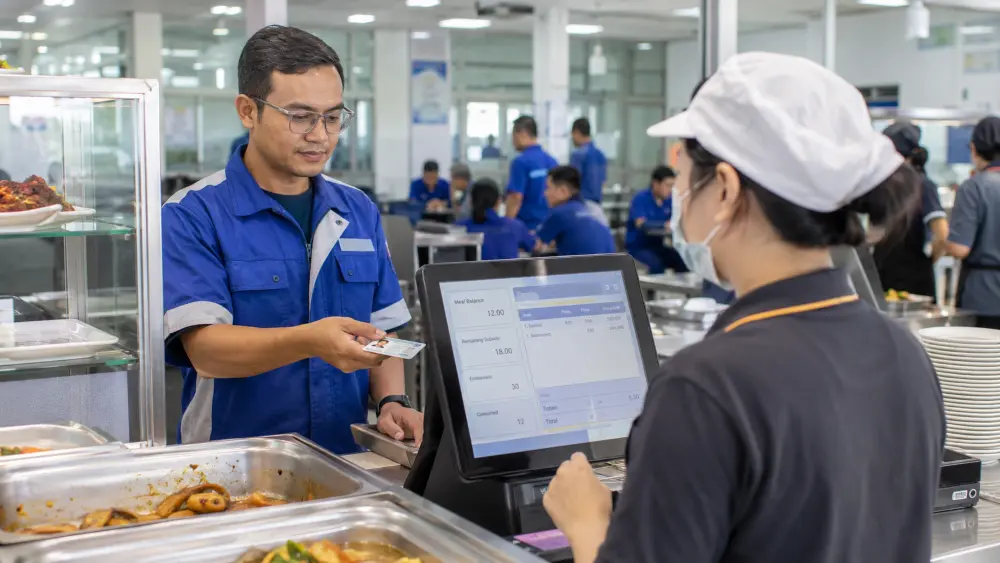
Define the Meal Policy Before Selecting the Software
Technology cannot compensate for an employee meal policy that has not been clearly defined. Before implementing an employee meal subsidy system, establish:
Different benefit models require different controls.
| Benefit Approach | Suitable When | Control to Define |
|---|---|---|
|
Daily subsidy |
Employees receive a defined daily meal benefit |
Value, refresh timing and eligibility |
|
Monthly subsidy |
Employees use an approved monthly balance |
Limit, expiry and carry-forward policy |
|
Fixed meal count |
Benefits are based on number of meals |
Meal allocation and reset period |
|
Prepaid balance |
Employees use stored value for canteen purchases |
Top-up, balance and user procedures |
1. Daily Subsidy
- Suitable when: Employees receive a defined daily meal benefit
- Control to define: Value, refresh timing and eligibility
2. Monthly Subsidy
- Suitable when: Employees use an approved monthly balance
- Control to define: Limit, expiry and carry-forward policy
3. Fixed Meal Count
- Suitable when: Benefits are based on number of meals
- Control to define: Meal allocation and reset period
4. Prepaid Balance
- Suitable when: Employees use stored value for canteen purchases
- Control to define: Top-up, balance and user procedures
The factory should define these rules before implementation rather than leaving canteen operators to interpret policy during a busy meal period.
Managing Shift Changes, Overtime Meals and Other Exceptions
Normal canteen transactions are usually straightforward. Exceptions create more administrative complexity.
Give HR, Finance and Operations the Information They Need
The same canteen transaction serves different business purposes.
HR and administration may need employee and subsidy usage information. Finance needs spending information for reconciliation. Canteen operators need daily sales and meal-redemption information. Management may need visibility across relevant canteen locations.
Before implementation, establish:
- Which reports each team requires
- Who has access to employee-level information
- Which figures finance needs for reconciliation
- Which reports operators need for daily activities
- How frequently reports should be reviewed
- Whether information needs to be printed or exported
Agreeing on these requirements before implementation prevents reporting from becoming an afterthought.
What to Verify Before Choosing a Factory Canteen Management System
A product demonstration should answer operational and technical questions, not only show software screens.
Build a Baseline Before Replacing the Current Setup
Before evaluating an upgrade, measure where the existing process is creating unnecessary work. For several weeks, record:
This gives HR, finance and operations a baseline for evaluating the existing process and comparing proposed improvements.
It also gives procurement clearer evidence of which requirements solve actual operating problems rather than simply adding more features.
These measurements can also be used after implementation to assess whether the new process has reduced administrative work and recurring exceptions.
What Does QubeApps’ Canteen Management System Support?
QubeApps supports the following core canteen-management capabilities. Final integration, identification, connectivity, synchronisation and approval requirements should be confirmed for each implementation.
| Requirement | QubeApps Capability |
|---|---|
|
Subsidy control |
Daily and monthly subsidy limits, automatic daily balance refresh, no-carry-forward rules and balance checking |
|
Meal redemption |
Fixed meal allocation, automatic meal-count deduction and redemption reporting |
|
Employee administration |
Add new employees, remove resigned employees and maintain subsidy rules |
|
Reporting |
Employee subsidy reports, usage logs, monthly spending trends, daily sales and meal-redemption information |
|
Multi-site administration |
Standalone and multi-site environments with scheduled data exchange between backend administration and canteen locations |
|
Canteen environment |
Integrated canteen-management software and POS hardware |
This gives factories a defined core capability set while leaving project-specific requirements to be agreed during implementation.
See how QubeApps implemented cashless transactions and backend canteen administration at Pin Hwa Independent High School. Although its operating environment differs from a factory, the project demonstrates QubeApps’ experience implementing canteen technology in a live operating environment.
Frequently Asked Questions (FAQ)
Review Your Canteen Workflow Before You Upgrade

A factory canteen should not require HR, supervisors and finance to keep compensating for gaps in the process.
If employee updates, overtime meals, subsidy checks or reconciliation still depend heavily on manual work, the current setup may no longer match the way the factory operates.
QubeApps approaches canteen management around the complete operating process, including employee administration, subsidy rules, meal redemption, reporting, POS hardware and multi-site requirements.
This helps keep the discussion focused on actual operational requirements rather than simply comparing feature lists.
Share your current canteen workflow with QubeApps to discuss the employee, subsidy, reporting and implementation requirements that should be addressed before you upgrade.