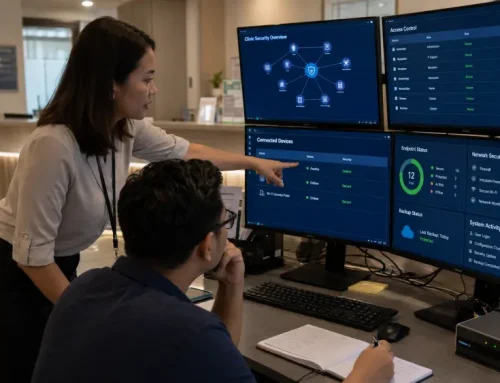

When a clinic system slows down, the impact is not only technical. Patients wait longer, staff spend more time troubleshooting, appointment flow is interrupted, and important information may become harder to access. For clinics, medical centres, diagnostic centres, wellness providers, and multi-branch healthcare groups, reliable healthcare IT solutions are now essential to support daily operations, data security, and business continuity.
For healthcare providers in Malaysia, this shift is not just about adopting new software. Clinics, medical centres, and healthcare groups handle appointment data, patient information, billing records, communication history, and operational reports every day. As these data volumes grow, the need for reliable IT systems becomes more important. Providers must also consider how personal data is collected, stored, accessed, and protected under Malaysia’s Personal Data Protection Act 2010. This makes infrastructure, cybersecurity, backup, devices, and managed IT support a critical part of running a secure and reliable healthcare operation.
In this guide, we explore the key technologies every healthcare provider should consider, what problems they solve, and how QubeApps can support healthcare organisations with practical, scalable, and secure technology solutions.
Table of Contents:
What Are Healthcare IT Solutions?
Healthcare IT solutions refer to the technologies, systems, devices, infrastructure, and support services that help healthcare organisations manage their operations more efficiently and securely.
These solutions can include network infrastructure, cybersecurity, cloud computing, ERP, CRM, data analytics, workplace devices, communication tools, and managed IT services. Together, they help healthcare providers operate with better system reliability, stronger data protection, and clearer management visibility.
In simple terms, healthcare technology solutions help healthcare providers answer important operational questions such as:
For healthcare providers, technology should not be viewed as a separate back-office function. It is part of the operational foundation that supports patient experience, staff efficiency, data security, and business growth.
Why Healthcare Providers Need Reliable IT Solutions
Healthcare operations are highly dependent on speed, accuracy, and trust. When technology systems are unstable, the impact can be felt across the entire organisation.
A slow system may delay patient registration. A weak network may interrupt access to internal platforms. Poor cybersecurity may expose sensitive data. Outdated devices may slow down staff. Disconnected systems may create duplicate work and reporting gaps.
Reliable healthcare IT solutions help reduce these risks by supporting the core areas of healthcare operations:

Healthcare providers need reliable IT systems to keep patient registration smooth and efficient. When registration systems are slow or unstable, front desk staff may take longer to check in patients, update information, or process daily administrative tasks.
A more stable IT environment helps reduce delays, improve the patient experience, and support a more organised registration workflow from the first point of contact.

Appointment handling depends on stable access to systems, communication tools, and scheduling information. If technology is unreliable, staff may face delays when managing bookings, responding to enquiries, or coordinating appointment changes.
Reliable IT support helps healthcare providers manage appointment flow more efficiently, reduce confusion, and create a smoother experience for both patients and staff.
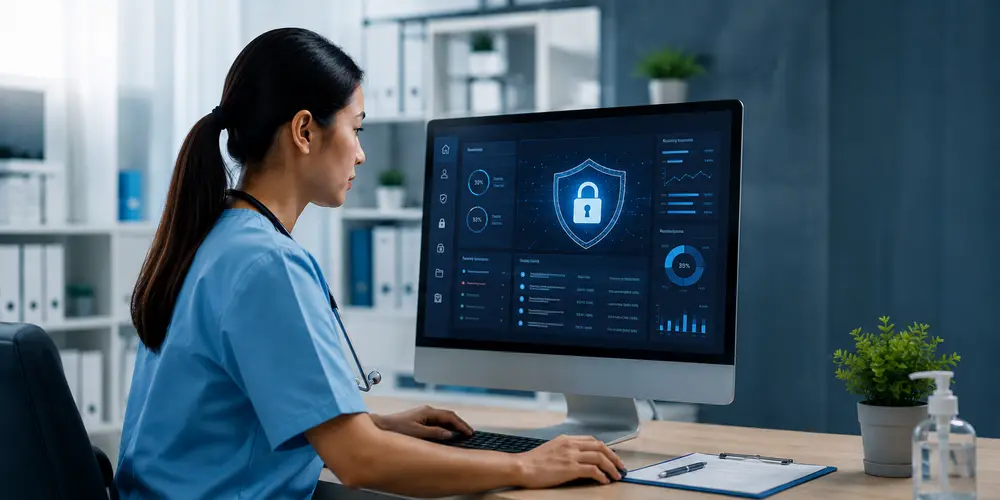
Healthcare providers handle sensitive patient, billing, and operational information, which makes data protection a major priority. Weak cybersecurity, poor access control, or lack of backup can increase the risk of data exposure, disruption, or loss.
Reliable IT solutions help support stronger data security through better infrastructure, cybersecurity measures, access management, and backup planning.

Daily healthcare operations depend on smooth communication between front desk teams, admin staff, management, and other departments. When systems are disconnected or communication tools are inconsistent, coordination becomes slower and more difficult.
Reliable technology helps support clearer communication, better information sharing, and smoother coordination across the organisation.

Healthcare providers need clear and timely reporting to understand operations, monitor performance, and support better planning. If data is scattered across different systems or reports are still handled manually, management may struggle to make informed decisions.
Reliable IT solutions help improve access to operational data, support more consistent reporting, and provide better visibility across the business.

Technology issues can disrupt more than daily tasks. They can also affect service continuity, staff productivity, and the ability to respond quickly when problems occur. This is why backup, monitoring, and recovery planning are important parts of the IT environment.
Reliable IT systems help healthcare providers reduce downtime, prepare for disruptions, and maintain more stable day-to-day operations.
The goal is not to adopt technology for the sake of digitalisation. The goal is to build a stronger technology foundation that helps healthcare teams work more efficiently, protect important data, and reduce avoidable operational disruptions.
Common IT Challenges Faced by Healthcare Providers
Before choosing any system or vendor, healthcare providers should first understand the problems they are trying to solve.
Many healthcare organisations face common IT and operational challenges such as:
| Challenge | Business impact |
|---|---|
| Unstable network or system access | Slower registration, billing, reporting, and daily operations |
| Weak cybersecurity | Higher risk of data exposure, phishing, ransomware, or unauthorised access |
| Manual admin work | More time spent on repetitive tasks and higher risk of human error |
| Disconnected systems | Duplicate data entry and limited management visibility |
| Outdated devices | Slower staff performance and more support issues |
| Lack of IT support | Longer downtime when technical problems happen |
| Poor backup or disaster recovery planning | Higher risk during system failure or data loss |
| Limited reporting | Harder for management to make informed decisions |
| Multi-branch inconsistency | Different locations may operate with different systems or standards |
These pain points are often connected. For example, a healthcare provider may think the issue is only “slow computers,” but the root cause could involve weak infrastructure, outdated devices, poor maintenance, or lack of proper IT monitoring.
That is why healthcare providers should look at technology as a complete environment, not as separate one-off purchases.
Is This Article Relevant to Your Healthcare Business?
Not every healthcare provider needs the same technology setup. A single-location clinic may prioritise stable connectivity, secure devices, patient communication, and IT support, while a larger medical centre or multi-branch healthcare group may need more advanced infrastructure, ERP, CRM, analytics, cybersecurity, and managed services.
The table below gives a practical starting point before exploring each technology area in detail.
| Healthcare Provider Type | Common IT Needs |
|---|---|
| Small clinic or GP clinic | Stable systems, secure devices, appointment support, backup, and IT support |
| Dental clinic | Reliable network, patient communication, secure devices, and appointment flow |
| Specialist clinic | Secure data access, reporting, CRM, and system reliability |
| Wellness or aesthetic centre | CRM, enquiry tracking, appointment reminders, and customer communication |
| Diagnostic or imaging centre | Stable infrastructure, secure data handling, backup, and workflow continuity |
| Pharmacy or healthcare retail group | Inventory visibility, payment system reliability, reporting, and cybersecurity |
| Medical centre | ERP, CRM, infrastructure, cybersecurity, cloud, and managed IT services |
| Multi-branch healthcare group | Standardised systems, centralised reporting, managed IT, and scalable infrastructure |
*This guide does not mean every healthcare provider needs every solution at once. The right IT setup depends on the organisation’s size, current systems, operational challenges, security needs, and future growth plans.
Not Sure Where to Start with Healthcare IT?

If you already recognise some of these challenges but are unsure where to start, QubeApps can help assess your current IT environment and identify suitable technology improvements based on your operations, business size, and future growth plans.
This may include reviewing areas such as infrastructure, cybersecurity, cloud, software, workplace devices, communication tools, and managed IT support.
Speak to QubeApps to assess your current IT environment and identify the right technology priorities for your healthcare organisation.
Key Healthcare IT Solutions to Consider
When evaluating technology solutions, healthcare providers should consider the full technology foundation behind daily operations.
This does not mean every organisation needs every system immediately. A small clinic, a dental practice, a diagnostic centre, and a multi-branch medical group may have different priorities. However, these key technology areas are worth understanding before making decisions.
Healthcare IT Infrastructure
Healthcare IT infrastructure is the foundation that supports digital healthcare operations. It can include network setup, connectivity, servers, cabling, Wi-Fi, backup, monitoring, and disaster recovery planning.
Without stable infrastructure, other systems may not perform well. Appointment platforms, cloud systems, CRM, ERP, reporting dashboards, communication tools, and cybersecurity solutions all rely on a strong infrastructure layer.
For healthcare providers, infrastructure matters because it supports:
For a healthcare provider, infrastructure should not be treated as “just internet and hardware.” It is the digital foundation that helps systems remain available, secure, and scalable.
Cybersecurity and Healthcare Data Security
Healthcare providers handle sensitive patient, operational, and business information. This makes healthcare data security a major concern.
According to IBM’s 2025 Cost of a Data Breach Report, healthcare recorded the highest average data breach cost among industries for the 14th consecutive year, at USD 7.42 million. The report also notes that healthcare breaches took the longest to identify and contain, at 279 days, which was more than five weeks longer than the global average. This shows why healthcare data security should be treated as an operational priority, not just an IT concern.
Cyber risks can come from many areas: phishing emails, weak passwords, unsecured devices, ransomware, poor access control, or lack of backup. In healthcare environments, these risks can affect trust, operations, and continuity.
Strong cybersecurity should help protect:
Cybersecurity in healthcare is especially important because healthcare organisations increasingly depend on connected systems, digital records, and remote access. A cybersecurity issue can disrupt more than IT. It can affect daily service flow, staff productivity, and patient confidence.
For healthcare providers, cybersecurity should not be viewed as a one-time product. It should be part of an ongoing security approach that includes protection, monitoring, user awareness, access control, and recovery planning. For a focused security review, follow our 8 essential cybersecurity checks for clinics to identify practical gaps and prioritise the next steps.
Cloud Computing and Backup
Cloud computing can help healthcare providers improve flexibility, scalability, and access to digital systems. It can also support backup, disaster recovery, remote access, and business continuity.
For healthcare organisations, cloud solutions may be useful when they need:
When evaluating healthcare cloud service providers, healthcare organisations should consider data access needs, backup requirements, recovery planning, security controls, and long-term support. However, healthcare providers should not move to cloud just because it is popular. The right approach depends on the organisation’s existing systems, budget, operational priorities, and security requirements.
The goal is not simply to “go cloud.” The goal is to build a reliable and secure digital environment that supports healthcare operations.
ERP for Healthcare Operations
An ERP system helps organisations manage core business functions such as finance, HR, procurement, inventory, supply chain, and reporting.
For ERP in the healthcare industry, the key value is operational visibility. Healthcare providers often deal with multiple moving parts, including staff scheduling, purchasing, stock usage, equipment, finance, reporting, and supplier coordination.
ERP can support healthcare operations by helping teams manage:
That said, ERP should not be introduced just for the sake of digitalisation. It is most useful when healthcare organisations have growing operational complexity, manual reporting issues, disconnected departments, or difficulty tracking resources across the business.
Healthcare CRM and Patient Communication
Healthcare CRM can help healthcare providers improve communication, appointment handling, enquiry management, and patient engagement.
In healthcare, communication gaps can create a poor experience. Missed enquiries, slow follow-ups, inconsistent appointment reminders, and disconnected patient communication can affect both service quality and business performance.
A CRM system can support:
For healthcare providers, CRM should be viewed as a communication and relationship tool, not just a sales system. Used properly, it can help improve responsiveness, consistency, and patient experience.
Client Computing and Workplace Devices
Technology performance is not only about software. Staff also need reliable devices to do their work properly.
Client computing includes laptops, desktops, workstations, monitors, endpoint devices, and mobile computing tools used by healthcare teams. In many healthcare settings, outdated devices can slow down daily tasks, increase support issues, and reduce staff productivity.
Healthcare providers may need reliable devices for:
For healthcare organisations, device planning should consider security, performance, compatibility, supportability, and future growth. A device is not just a purchase. It is part of the overall user experience and security environment.
Managed IT Services for Healthcare
Many healthcare providers do not have a large internal IT team. Even when they do, the team may already be busy supporting daily operations, troubleshooting issues, managing users, coordinating vendors, and maintaining systems.
This is where managed IT services can help.
Healthcare IT managed service providers support organisations by providing ongoing IT support, maintenance, monitoring, troubleshooting, and technical guidance. For healthcare businesses, this can reduce downtime, improve response time, and help teams focus on healthcare operations instead of technical issues.
Managed IT services can support:
For healthcare providers, managed IT support is valuable because IT issues are not just technical problems. They can delay operations, frustrate staff, interrupt patient service, and create unnecessary business risk.
How to Match Healthcare IT Solutions to Business Needs
Not every healthcare provider needs the same technology setup. The right solution depends on business size, operational complexity, security needs, number of locations, and existing systems.
A useful way to start is by matching the business problem to the right technology area.
| If your healthcare business is facing this… | Consider this solution area |
|---|---|
| Slow systems, weak Wi-Fi, or unstable connectivity | Healthcare IT infrastructure |
| Concern about patient data exposure | Cybersecurity and healthcare data security |
| Manual finance, HR, inventory, or procurement work | ERP for healthcare operations |
| Poor patient follow-up or enquiry handling | Healthcare CRM |
| No clear backup or disaster recovery plan | Cloud backup and disaster recovery |
| Staff devices are slow or outdated | Client computing and workplace devices |
| IT problems take too long to resolve | Managed IT services |
| Management cannot see reports clearly | Data analytics and business intelligence |
| Multiple branches operate differently | Infrastructure, cloud, managed services, and reporting tools |
This approach helps healthcare providers avoid buying technology based only on trends. Instead, they can prioritise solutions based on the operational problems they need to solve first.
What to Look for in Healthcare IT Solutions Providers
Since the search intent for healthcare IT solutions providers is often commercial, healthcare decision-makers should know what to evaluate before choosing a partner.
When comparing healthcare technology solution providers, healthcare decision-makers should look beyond products and pricing. The right partner should be able to support the full technology environment, including implementation, cybersecurity, daily troubleshooting, system scalability, and long-term maintenance.
Here are key factors to consider:
| What to Check | Why It Matters |
|---|---|
| Healthcare industry understanding | Healthcare environments have specific operational and data concerns |
| Infrastructure capability | Systems need stable connectivity, backup, and monitoring |
| Cybersecurity expertise | Patient and business data need proper protection |
| Cloud and backup support | Helps with scalability, recovery, and continuity |
| Software capability | Supports ERP, CRM, analytics, and workflow needs |
| Client device support | Staff need reliable, secure, and supportable devices |
| Managed IT support | Reduces downtime and gives ongoing technical help |
| Scalability | The setup should support business growth or new locations |
| Local support | Faster communication and coordination when issues happen |
Among different healthcare tech solution companies, the best fit is not always the one with the longest list of products. It is the one that can help healthcare providers identify the right priorities, implement suitable solutions, and support the environment after deployment.
How QubeApps Supports Healthcare Providers
At QubeApps, we help organisations build healthcare technology solutions for healthcare providers that support daily operations, security, visibility, and long-term growth. With 14+ years of experience, support for 12,000+ businesses, and a presence across 16 countries, QubeApps brings experience in delivering integrated AIDC, ICT, and POS solutions for modern business operations.
For healthcare providers, this means our role is to support the IT environment behind the business, not to replace clinical expertise or medical decision-making systems. Depending on the organisation’s needs, we can help strengthen areas such as IT infrastructure, cybersecurity, cloud, workplace devices, business software, analytics, ERP, CRM, and managed IT services.
This may include support across:
The value is not just in providing individual technologies. It is in helping healthcare providers identify the right technology priorities and build a more connected, secure, and manageable IT environment that supports daily operations and future growth.

Summary
Healthcare providers today need more than basic IT support. They need a reliable technology foundation that supports patient experience, daily operations, data protection, communication, reporting, and business continuity.
The right technology solutions can help healthcare organisations strengthen infrastructure, protect sensitive data, improve communication, support ERP and CRM needs, enable cloud flexibility, equip staff with reliable devices, and reduce downtime through managed IT services.
For healthcare providers, the first step is not to adopt every technology at once. The first step is to understand the business problems, identify the right technology priorities, and work with a provider that can support both implementation and long-term operations.
Looking to improve your healthcare operations with reliable technology solutions?
Speak to QubeApps to assess your current setup and identify the right healthcare IT solutions for your organisation.